print and apply labels, labeler, large character marking, case coding
Choosing the right secondary packaging marking solution affects GS1 barcode grading compliance, operational efficiency, and downstream supply chain performance. When you move from pre-printed corrugate to end-of-line printing, labeling, or laser coding, you can make a positive impact on case coding performance, barcode quality, compliance, and throughput.
This guide outlines the five most important factors to evaluate before investing in label print-and-apply (LPA) systems, thermal inkjet printing (TIJ) and large character marking (LCM) printers based on practitioner insights from Videojet specialists Carl Chaplin (North America product manager) and Marc Alengry (EMEA Field product manager).
Start with the substrate and contrast
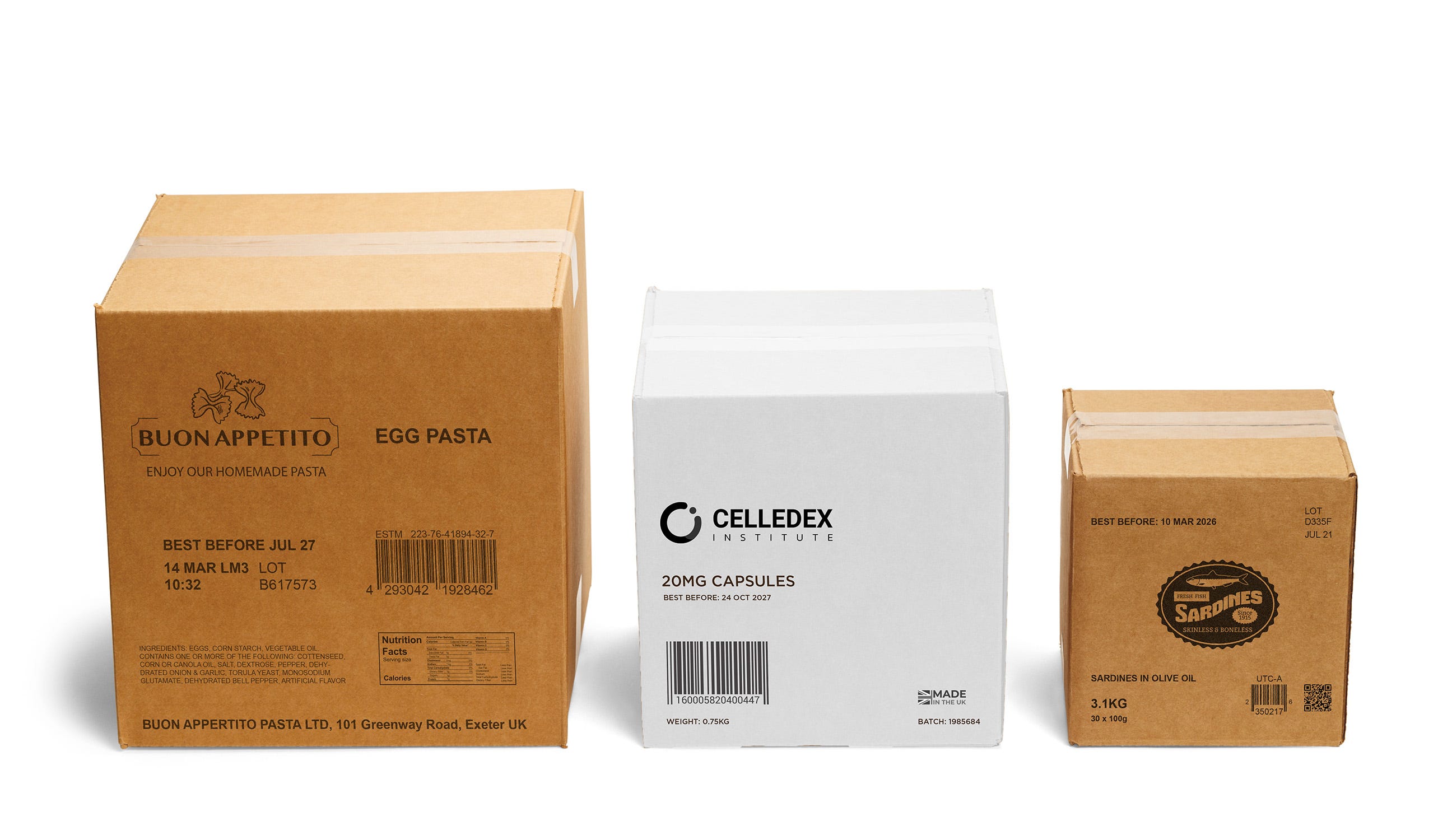
Readable codes start with contrast. Uncoated brown and white corrugate provide the best surfaces for large character inkjet (LCM) allowing for clear human-readable text and machine-readable barcodes. However, contrast becomes far more challenging on:
Varnished boxes
Colored corrugate
Heavily pre-printed cases
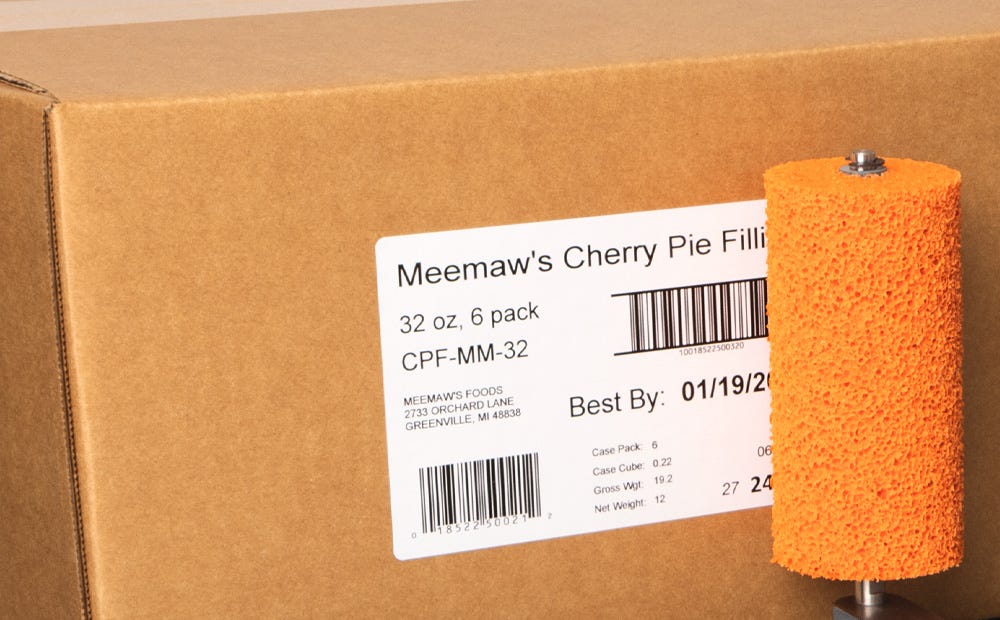
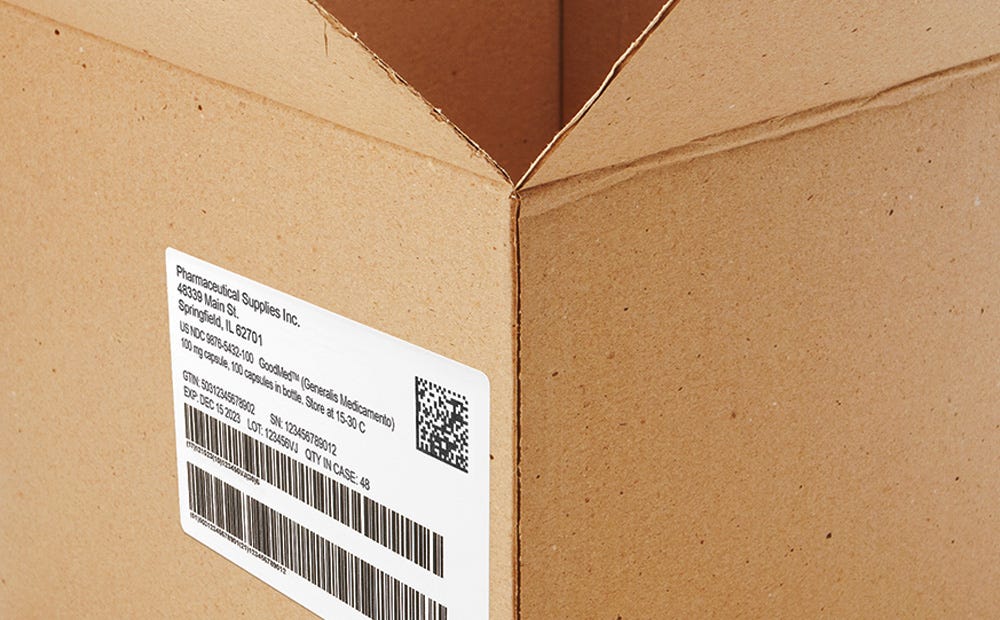
In these situations, label print-and-apply (LPA) typically wins because labels provide a consistent, high-contrast background. Laser can be an option, but contrast is highly dependent on the material and may require laser-reactive coatings for corrugated coding. Thermal inkjet (TIJ) also offers high‑resolution printing on both porous and non‑porous surfaces, making it a flexible choice when substrate compatibility and code appearance are priorities.
Expert Insight: “On varnished or heavily pre‑printed boxes, large character inkjet can struggle to deliver consistent barcode grades — especially for 2D codes, which require higher contrast. In these cases, label print-and‑apply systems typically offer more reliable contrast and placement.”
Key takeaway: Substrate contrast is the primary driver of barcode quality, often determining whether label print-and-apply,inkjet, or laser is viable.
Define your barcode targets: grade, symbology and placement
Before selecting equipment, define downstream requirements clearly:
1D vs 2D codes
Target grade (A, B, or C)
Placement requirements
Placement requirements include the side of the case that must be marked, the size and location of the barcode zone, and how consistently the code must appear within that area. These factors can influence whether non‑contact printing or mechanical label application is the better fit.
Label print-and-apply systems using thermal transfer printing provide consistent barcode quality for both 1D and 2D codes because the print occurs on a controlled label surface rather than directly on variable corrugate. This helps maintain stable grading across mixed corrugate stocks. On uncoated, non‑recycled corrugate, large character inkjet delivers strong contrast and reliable readability for many 1D barcodes and large alphanumeric codes.
Large character inkjet printers can meet many needs especially for human-readable and some 1D codes, but recycled corrugate can vary in shade, making consistent grading difficult on these surfaces. With the acceleration of 2D code adoption and GS1 Sunrise 2027, expectations around barcode readability and grading consistency are tightening.
Expert Insight: “Labelers excel at consistent placement and quality because printing happens on the label engine, not on the moving product.”
Key takeaway: Defining barcode grade, symbology, and placement requirements upfront is essential to meeting GS1 barcode grading expectations and avoiding costly downstream failures.
Read more about GS1 Sunrise 2027 and its impact on barcode quality requirements.
Label print-and-apply (LPA) vs large character inkjet (LCM): matching technology to throughput, pitch, and flexibility
If cases run close together (tight pitch), mechanical applicators need time to extend and retract, which can constrain throughput. Automated label application technologies such as Videojet Direct Apply™ eliminate the need for tamp arms entirely, applying labels without extension or retraction. This enables higher throughput, reliable label placement at tight pitch, and fewer moving parts compared to traditional mechanical applicators.
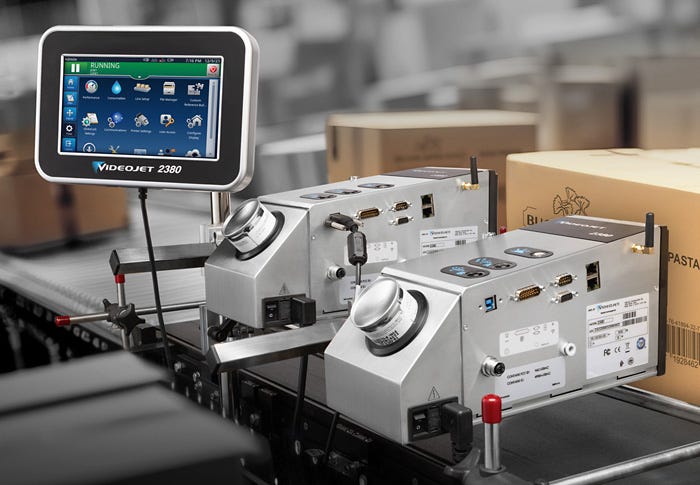
Large character inkjet coders have no moving applicators and are often the fastest choice for side-of-case marks, although printing on the front face may require a bump-turn or additional handling.
Labelers excel at consistent placement and barcode quality, and are resistant to vibration because printing happens on the label engine, not on the moving product.
Expert Insight: “Inkjet systems are typically faster and can handle tighter pitches than case labelers, making them ideal for tight pitch applications.”
Key takeaway: Line speed, case pitch, and placement flexibility should guide technology choice, as some mechanical applicators and non-contact inkjet systems perform very differently under tight throughput constraints.
Evaluate Total Cost of Ownership (TCO), not unit price
Purchase price alone rarely reflects the true cost of secondary packaging marking.
Key TCO drivers include:
Consumables (ink, labels, ribbons)
Planned downtime for cleaning and changeovers
Waste and rework from unreadable codes
Maintenance labor and spare parts
For consumables and line stops, inkjet tends to be lowest cost per code and can run long intervals. Labelers add label and ribbon costs and require periodic roll changes. TIJ cartridges hold relatively low ink volumes, which can increase cost per code and may require frequent cartridge replacements during longer or higher‑coverage production runs. Laserremoves inks and labels but may shift cost to laser-reactive corrugates or specialized safety/extraction infrastructure. Account for planned downtime for consumables changeovers/cleaning, and waste to help ensure sustainable secondary packaging marking.
Expert Insight: “Directed inkjet can be multiple times lower cost-per-mark than labeling or laser in many case applications, depending on consumables, duty cycle, and code requirements.”
Key takeaway: Evaluating the total cost of ownership, including consumables, downtime, maintenance provides a more accurate picture than comparing equipment purchase price alone.
Reliability, support, and space: the practical constraints
End-of-line is often dusty and space-constrained.
Key considerations include:
Conveyor access and available footprint
Whether multiple sides of a case require marking
Operator skill and training
Preventive maintenance requirements
Local service availability and spare parts
Large character inkjet systems require periodic head cleaning. Labelers depend on trained operators for roll/ribbon changes. All technologies benefit from responsive local service to keep case coding operations running reliably with minimal downtime.
Expert Insight: “Secondary packaging operations sit in harsh environments. Any system will need cleaning and service. If a vendor claims ‘no maintenance’, that’s a red flag.”
Key takeaway: Reliable case coding depends as much on service, operator capability, and physical space as it does on the marking technology itself. Plan for harsh environments, maintenance needs, and support availability early to avoid unexpected downtime and integration challenges.
Conclusion: choosing the right secondary packaging marking strategy
Selecting the right marking method balances:
Substrate compatibility
Barcode quality and GS1 compliance
Throughput and placement needs
Total cost of ownership
Long-term service and reliability
Evaluating these factors early helps prevent costly redesigns, scanning failures, and operational inefficiencies. For a tailored line‑side assessment and trials, talk to a Videojet case coding specialist about your secondary packaging marking requirements.
Secondary packaging marking technologies: comparison and best fit
The table below summarizes how the most common secondary packaging marking technologies compare and which production conditions they are best suited for:
Clean environments, low-consumable strategies, permanent marks
Requires laser-reactive substrates or coatings for adequate contrast on corrugate
Highly dependent on material; inconsistent grading without reactive surfaces
High throughput; no applicator, but integration complexity varies
Higher upfront investment; minimal consumables, added safety and extraction costs
Frequently asked questions about secondary packaging marking
What are the most common challenges manufacturers face today with secondary packaging marking?
Space constraints, variable corrugate contrast, meeting GS1 barcode grading targets, and balancing throughput with total cost of ownership.
What technical criteria should a buyer evaluate?
Substrate/finish and contrast; barcode symbology/grade targets; line speed and pitch; placement requirements; total cost of ownership (TCO) including consumables, downtime; and service model (local support, spares availability, and agreement terms).
How do different substrates impact technology choice?
Uncoated corrugate favors LCM inkjet for human-readable and many 1D codes. Varnished or heavily pre-printed boxes and films typically favor LPA for barcode grading consistency. TIJ can produce high‑quality codes on both porous and non‑porous substrates. Laser may require laser reactive coatings for contrast.
What standards or rules apply?
GS1-aligned barcode grading and placement conventions, along with increasing adoption of 2D codes under GS1 Sunrise 2027 and tighter readability expectations.
What reliability or maintenance issues are underestimated?
Commonly underestimated factors include dust, inkjet head cleaning, label/ribbon changes, and ensuring operators are trained and local technical support is responsive.
What common mistakes happen during selection or installation?
Common mistakes include choosing based on unit price instead of barcode and 2D code outcomes, ignoring space/pitch constraints, and under-planning verification, service, and operator training.
If you had only three pieces of advice?
1. Start with customer barcode or 2D code requirements. 2. Pick the technology that fits your substrate/throughput/placement needs. 3. Never compromise on local support and verification.
The insights in this article are grounded in real customer discussions and field experience shared by Carl Chaplin (North America product manager) and Marc Alengry (EMEA field product manager). Their combined expertise across LPA, TIJ, and LCM technologies—built over years of supporting end‑of‑line projects—shapes the examples and trade‑offs presented here. The scenarios reflect common secondary packaging applications in food, beverage, pharmaceutical, CPG, and logistics environments.